
User experience (UX) design
Turning interactions into unforgettable experiences

At a glance:
User experience was coined in the 1990s by cognitive psychologist Don Norman.
It refers to the experience we have with a service or a product.
Principles trace back thousands of years, linked to ancient Chinese practice of Feng Shui.
Feng shui's meaning can be broken down into the Chinese words "feng," meaning wind, and "shui," meaning water. The concept is derived from an ancient poem that talks about human life being connected to and flowing with the environment around it)
User experience - It refers to the overall experience that a person has when interacting with, or experiencing a system or product.
The product here could be any physical product like a joystick 🎮 or it could be a software application.
Important Goals of UX
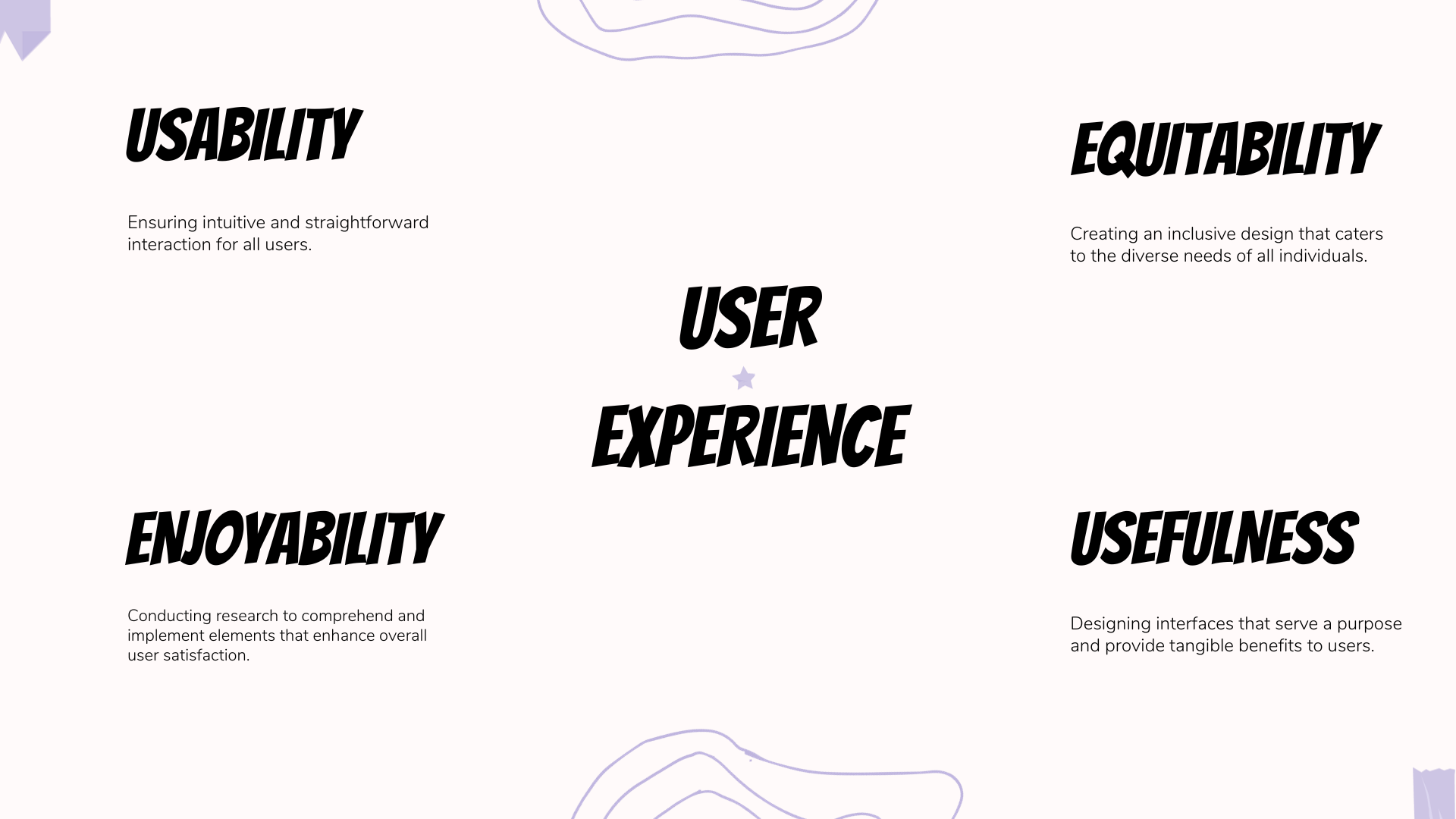
Usability (Ease of Use): Crafting interfaces that prioritize intuitive navigation, simplifying user interactions for a seamless experience. One of the most important aspects of creating a successful product or service is ensuring that it is intuitive and straightforward for all users.
This means considering the needs and abilities of a diverse range of users, including those with special abilities or who may be using the product or service in a language that is not their first.Equitability (Inclusive Design): Fostering inclusivity by designing for diversity, ensuring all users, regardless of background or ability, can engage effortlessly with the interface. Inclusive design is an approach that recognizes and accommodates the diversity of human abilities, needs, and preferences.
It aims to create products, services, and environments that are accessible, usable, and enjoyable by everyone, regardless of their age, gender, ethnicity, culture, language, and physical or cognitive abilities.Enjoyability (Positive User Experience): Conducting thorough research to identify and implement elements that contribute to an enjoyable and memorable user experience. Research is a crucial step in understanding user behavior, needs, and preferences.
By gaining insights into users' interactions with a product or service, we can identify pain points and areas of improvement. This information can then be used to design and implement features that enhance the overall user experience, ultimately leading to increased user satisfaction.Usefulness (Functional Value): Creating interfaces with a clear purpose, delivering practical benefits to users and addressing their specific needs effectively. User-centered design principles should be at the forefront of any design process, with a focus on creating interfaces that are intuitive, easy to navigate, and efficient.
In order to achieve this, designers need to understand the needs and goals of their users, as well as the context in which they will be using the interface. This involves conducting user research, testing prototypes, and iterating on designs based on feedback.
Thank you for reading. Have a great day.
Reference:
https://www.thespruce.com/what-is-feng-shui-1275060
https://www.coursera.org/learn/foundations-user-experience-design/resources/TlaEX